
Guide to Fridge Water Filters in Australia: When, Why & How to Replace Yours
Clean drinking water and high-quality ice are household essentials—especially in Australia, where long, hot summers and busy family lifestyles put extra demand on your fridge’s water dispenser and ice maker. Whether you are topping up your water bottle before heading out or hosting a backyard barbecue, fridge water filters make sure every sip is fresh, safe, and tasty.
On average, Australians each spent about $580 buying 504 litres of bottled water in 2021, a UN report1 suggests. But with a properly maintained fridge water filter, you can enjoy great-tasting water straight from the fridge and reduce your reliance on single-use plastics2.
Why do fridge water filters need replacing?
Modern fridge water filters are designed to remove impurities like chlorine, sediment, bacteria, rust, and even some heavy metals. However, over time these filters become saturated and less effective. Build-up not only reduces water quality and taste but can also impact the performance of your fridge, decreasing water flow and causing unnecessary strain on the dispenser pump.
Common contaminants found in tap water in Australia include:
• Chlorine: Used for disinfection but imparts taste and odour.
• Sediment and Rust: Often found where older pipes are common.
• Bacteria: Can colonise old filters.
• Heavy Metals: Trace amounts of lead, copper, and other metals may be present in some regions.
As the filter reaches its capacity, you might notice water tastes ‘off’, or ice cubes become cloudy and develop unpleasant flavours.
How often should you replace your fridge water filter?
The general guideline for replacing most fridge water filters is every 6 months. But this can vary based on key factors:
• Usage Level: Larger households and frequent entertainers will cycle more water through the filter, which can shorten its effective lifespan. Families of four may need replacements closer to every 5 months, whereas singles who rarely use the dispenser could stretch the interval a little longer.
• Water Quality: In areas with hard water (like Adelaide, Perth, and parts of regional NSW), minerals and sediment build up faster, requiring more frequent changes. Sydney’s water is softer and contains fewer particulates, which can extend filter longevity.
• Fridge Brand/Model: Each manufacturer will specify compatible replacement intervals. Some even have built-in sensors and ‘filter change’ warning lights for convenience.
Health experts and fridge manufacturers agree—waiting longer than 6 months risks not only taste and odour but also the potential for bacteria buildup, which can affect your health.
Signs your water filter needs replacing sooner
Sometimes, you will need to change your fridge filter before the 6-month mark. Watch out for:
• Changes in taste or smell: Water that tastes strange or smells different is your first warning sign.
• Slow water flow: If your dispenser seems sluggish, the filter may be clogged.
• Bad-tasting or cloudy ice: If ice tastes unpleasant or looks milky, swap the filter immediately.
• Filter indicator light: Many modern fridges have a sensor that alerts you when the filter needs replacing—do not ignore it.
How to check which water filter your fridge uses
Every fridge is different, but finding the right filter is easy if you know where to look:
1. Model Number: Often found inside the fridge compartment (side wall,
ceiling, or door frame). Write it down for reference.
2. Filter Location:
• Inside compartment (usually ceiling or rear wall)
• Grille at the bottom front of fridge
• Rear or side of the exterior
3. Genuine vs Compatible Filters: Genuine filters are certified by
manufacturers for performance and warranty. Compatible filters (also called universal or aftermarket) may offer savings but should be from reputable brands
DIY: how to replace your fridge water filter
Replacing your filter is a straightforward task you can do yourself—here is how:
1. Remove the old filter—twist, pull, or pop out as per your fridge's manual.
2. Install the new filter—ensure it locks in place.
3. Flush the system: Run water through the dispenser for 3–5 minutes (discard the first 5–10 litres) to clear out carbon dust and impurities.
4. Reset the filter change light (if applicable).
Tip: Be sure to follow the instructions in your fridge’s user manual to prevent any issues
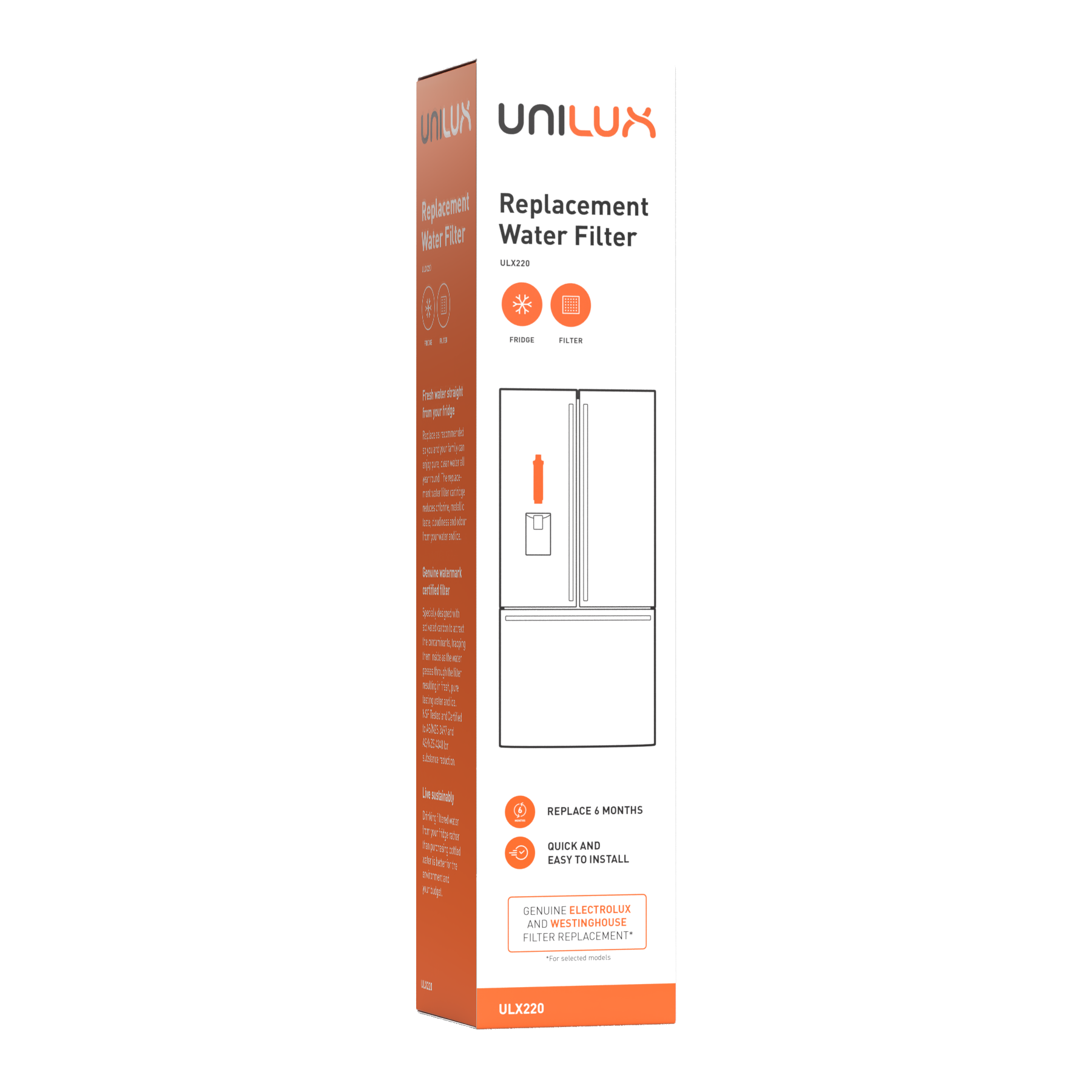
Need a replacement? Check out our range of fridge water filters and accessories.
Replacing your fridge’s water filter every 6 months ensures clean, safe drinking water and prolongs the life of your appliance. Check your fridge model today and give your family the benefits of pure, delicious water, all year round.
References
1. Bouhlel, Zeineb; Köpke, Jimmy; Mina, Mariam; Smakhtin, Vladimir. Global Bottled Water Industry: A Review of Impacts and Trends. United Nations University Institute for Water, Environment and Health (UNU-INWEH), Hamilton, Canada, 16 March 2023. Available at: https://unu.edu/inweh/collection/global-bottled-water-industry-review-impacts-and-trends
2. Department of Climate Change, Energy, the Environment and Water. How you can reduce plastic waste. Australian Government, 20 April 2023. Available at: https://www.dcceew.gov.au/environment/protection/waste/publications/how-you-can-reduce-plastic-waste-fs
 Book a Service and Repair